Climate Change Response
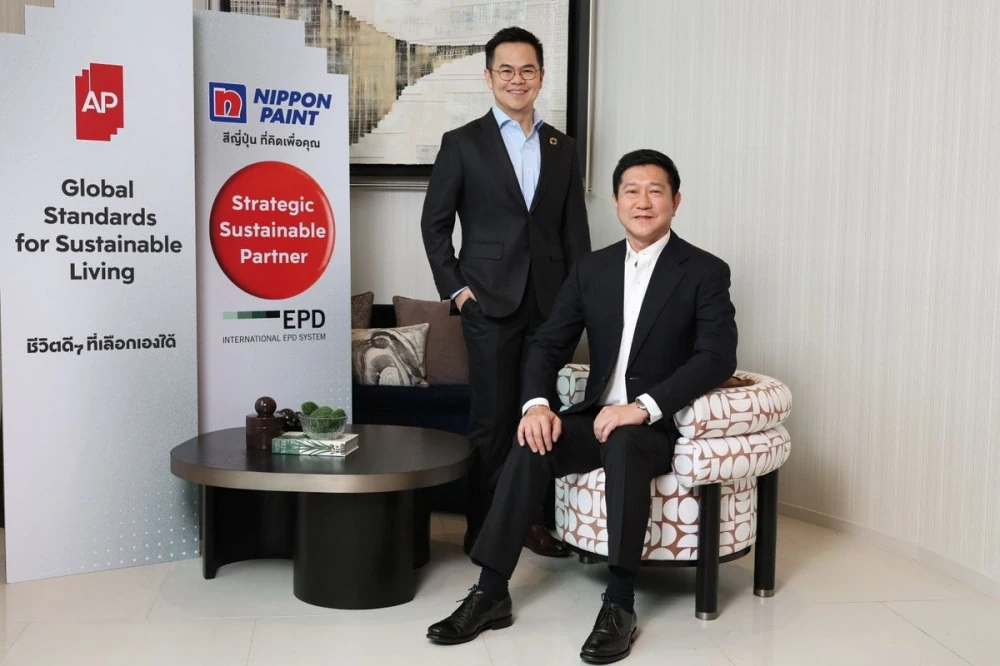
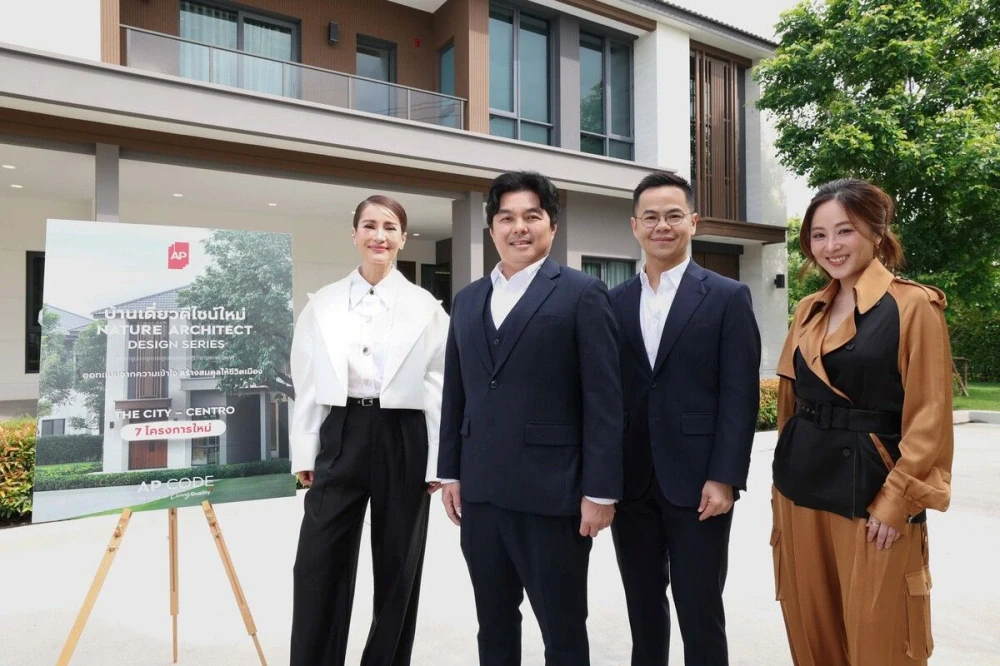
Adoption of eco-friendly and low-carbon construction materials
To reduce carbon dioxide emissions by up to 70.23 tCO2e per home.









Goals

Reduction of greenhouse gas emissions only at head office (scope 1+2)
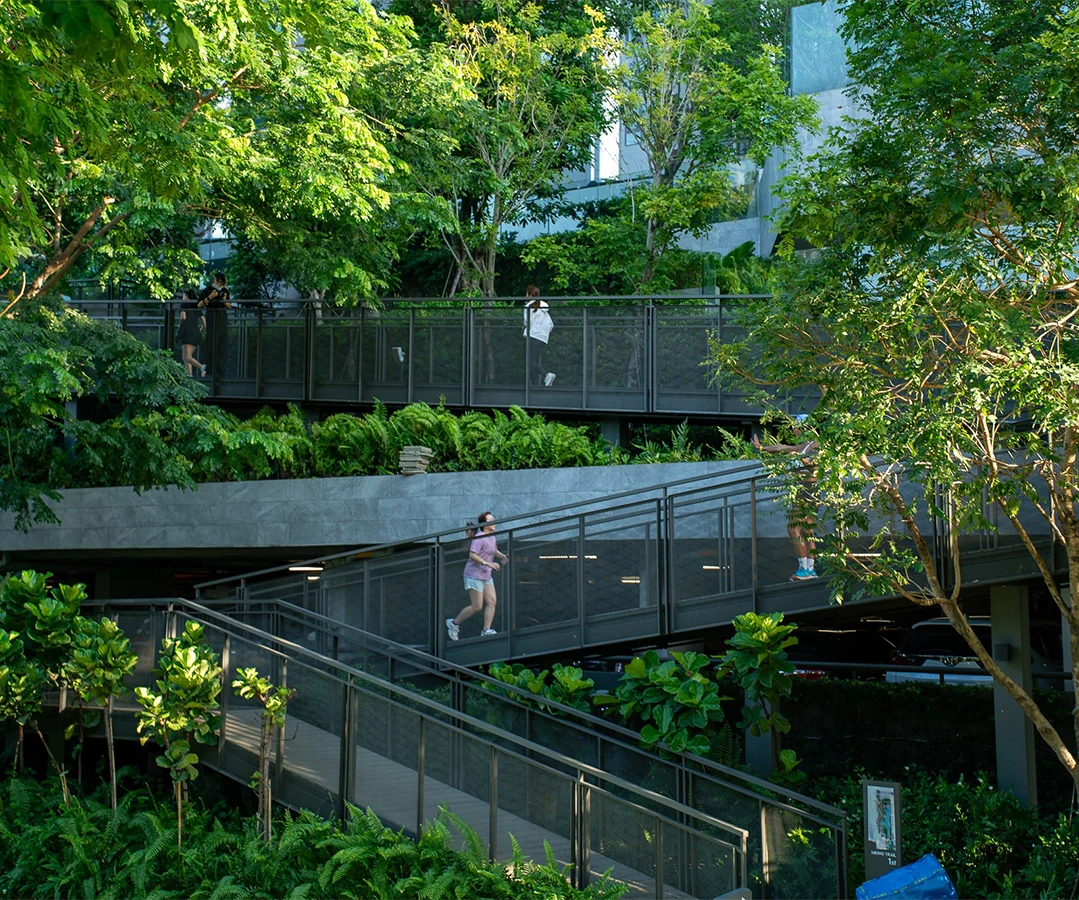
The accumulation of carbon sequestration by trees from Habitat Network project
Performance Highlights


Our Commitment
AP Thailand is dedicated to developing sustainable real estate by carefully considering environmental impacts. The company places great importance on designing energy-efficient buildings, promoting the use of environmentally friendly and low-carbon materials, and reducing greenhouse gas emissions throughout the project life cycle. Additionally, the company focuses on the development of smart city concepts, the expansion of green spaces, and the design of projects that can adapt to climate change to enhance the quality of life for residents, while managing resources efficiently and contributing to sustainable climate solutions.
Supporting the SDGs Goals

Stakeholders Directly Impacted


Challenges and Opportunities

Striving toward carbon neutrality by 2050 under the Climate Action Plan.
AP Thailand has a comprehensive strategic plan to reduce greenhouse gas emissions while driving business growth.
Management Approach and Value Creation
Climate Change Governance
AP (Thailand) Public Company Limited recognizes the risks and opportunities arising from climate change, both directly and indirectly, which may impact the business in the long term. Therefore, the company has integrated climate change management into its corporate strategy. This effort is overseen by the Corporate Governance and Sustainability Development Committee, which is responsible for setting policies, goals, and operational guidelines in alignment with the corporate strategy, as well as continuously monitoring and evaluating performance.
Moreover, the company has appointed a Sustainability Working Team to proactively drive operations across all dimensions, including reducing greenhouse gas emissions, using resources efficiently, and collaborating with partners to create an ecosystem that supports climate impact mitigation.

To ensure that the organizational climate management is continuous, transparent, and responsive to stakeholder expectations in the long term, the Corporate Governance and Sustainability Development Committee regularly monitors the performance of the Sustainability Working Team on a quarterly basis. This is to enable effective control over the organization’s greenhouse gas emissions reduction and to set directions for further development.
Climate Change Management Strategy
AP (Thailand) Public Company Limited has defined its climate change management strategy in alignment with its long-term goal of achieving carbon neutrality by 2050. The company emphasizes organization-wide actions across all dimensions, including sustainable project design, the use of eco-friendly materials and energy, green space management, and stakeholder engagement.
The company has assessed climate-related risks and opportunities in order to develop appropriate plans on the operations for both the short and long term. The company has also integrated greenhouse gas reduction measures into every process of its value chain.
This strategy covers the use of technology to enhance energy efficiency, the installation of solar power systems in project areas, promotion of the Green Building concept, and development of ‘urban forest’ projects to promote biodiversity and carbon sequestration. It also includes collaboration with partners on recycling and waste management projects.
These are carried out under the principles of good governance, transparency, and accountability, aiming to create sustainable value for all stakeholders equally and to support business growth in alignment with the Sustainable Development Goals (SDGs).
Internal Carbon Pricing
In 2026, AP introduced an internal carbon price of THB 84.84/tCOM2e, using TGO’s 2026 weighted average carbon credit price as a reference. The internal carbon price is applied in determining the Company’s 2027 environmental budget based on estimated annual GHG emission reductions and is reviewed annually.

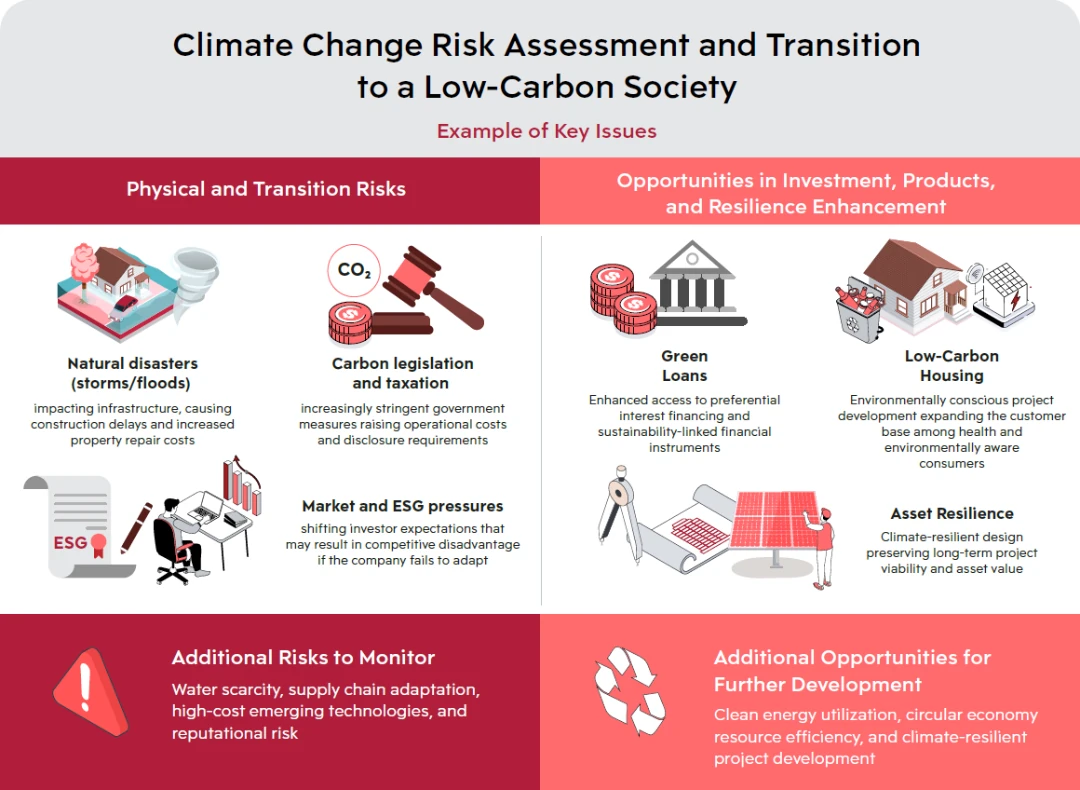
Climate Change Risk and Opportunity Assessment and the Transition to a Low-Carbon Society
The Company has conducted climate change risk assessments in accordance with ESG principles and the Task Force on Climate-related Financial Disclosures (TCFD) framework, applying these across the entire value chain to enable effective risk management and enhance future business opportunities. The assessments encompass physical risks, policy risks, regulatory changes, and other related transitions for enabling the Company to respond to change and adapt its operations to remain viable in an evolving climate.
Operational Data Disclosure
AP (Thailand) Public Company Limited systematically collects and reports environmental and greenhouse gas emissions data in accordance with relevant national and international frameworks and standards, including the GRI Standards 2021, TCFD, ISO 14064-1, and the guidelines of the Thailand Greenhouse Gas Management Organization (Public Organization) (TGO). This approach ensures that the disclosed information is complete, accurate, and responsive to the expectations of all stakeholder groups.
In 2025, the Company had its organizational carbon footprint data externally verified. Its combined Scope 1 and Scope 2 greenhouse gas emissions amounted to 1,168 tonnes of carbon dioxide equivalent (tCO₂e), decreasing from 1,371.7 tCO₂e in 2024, representing a reduction of approximately 14.91%.
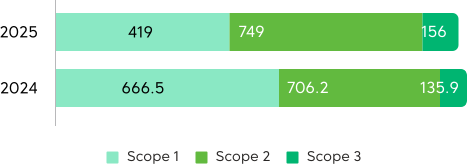
For the verification of the Company’s Scope 3 organizational carbon footprint, all relevant emission categories were comprehensively reviewed. Based on the assessment of other indirect greenhouse gas emission sources, the category identified as the Company’s most significant emission source—having received the highest overall assessment score—and therefore included in this organizational greenhouse gas emissions report was Fuel- and Energy-Related Activities, covering the acquisition of fuels and energy consumed by the organization. (For further information, please refer to Carbon Footprint for Organization in Accordance with TGO Guidelines and ISO 14064-1.
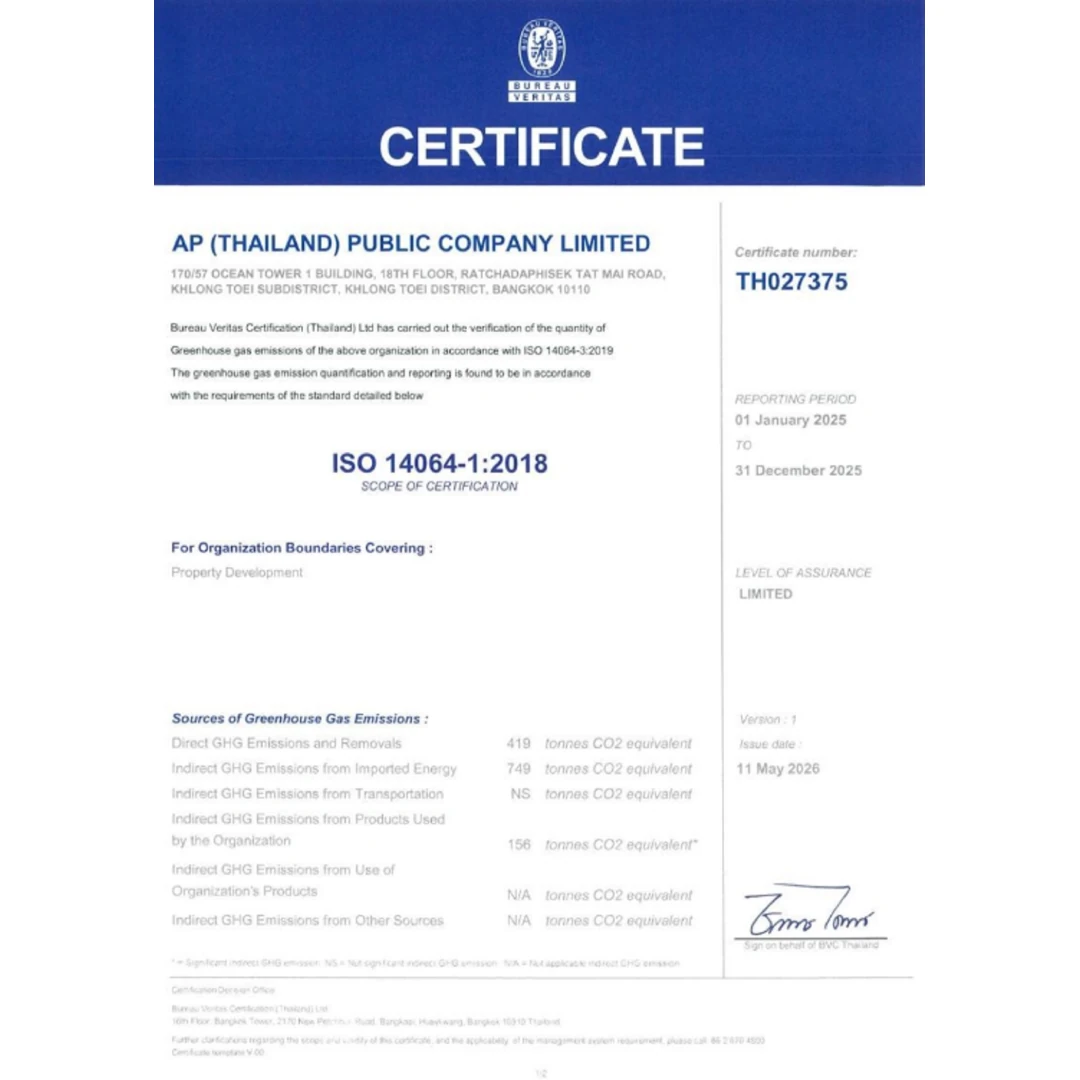
ISO 14064-1 Certification
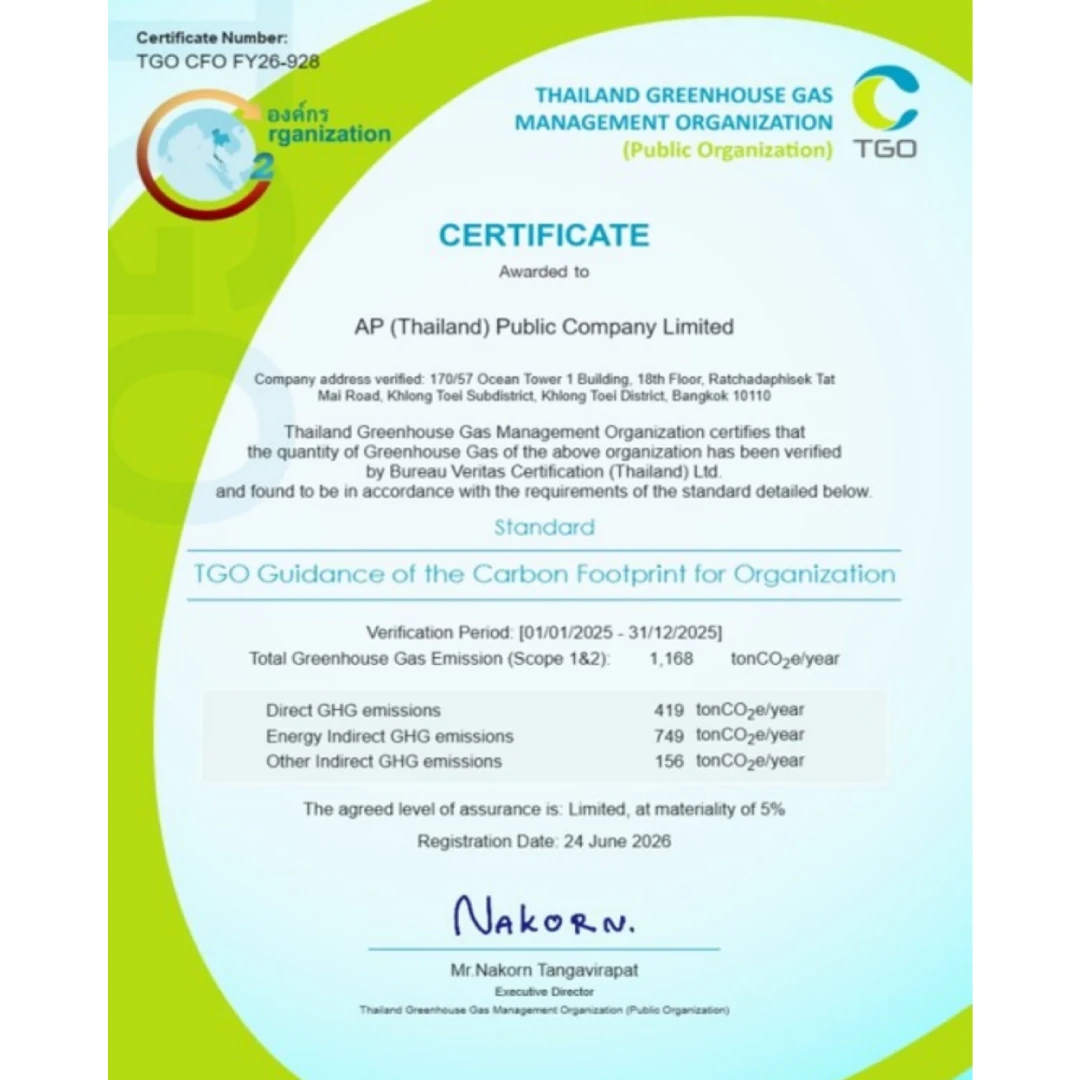
Carbon Footprint for Organization (CFO) Certification by TGO

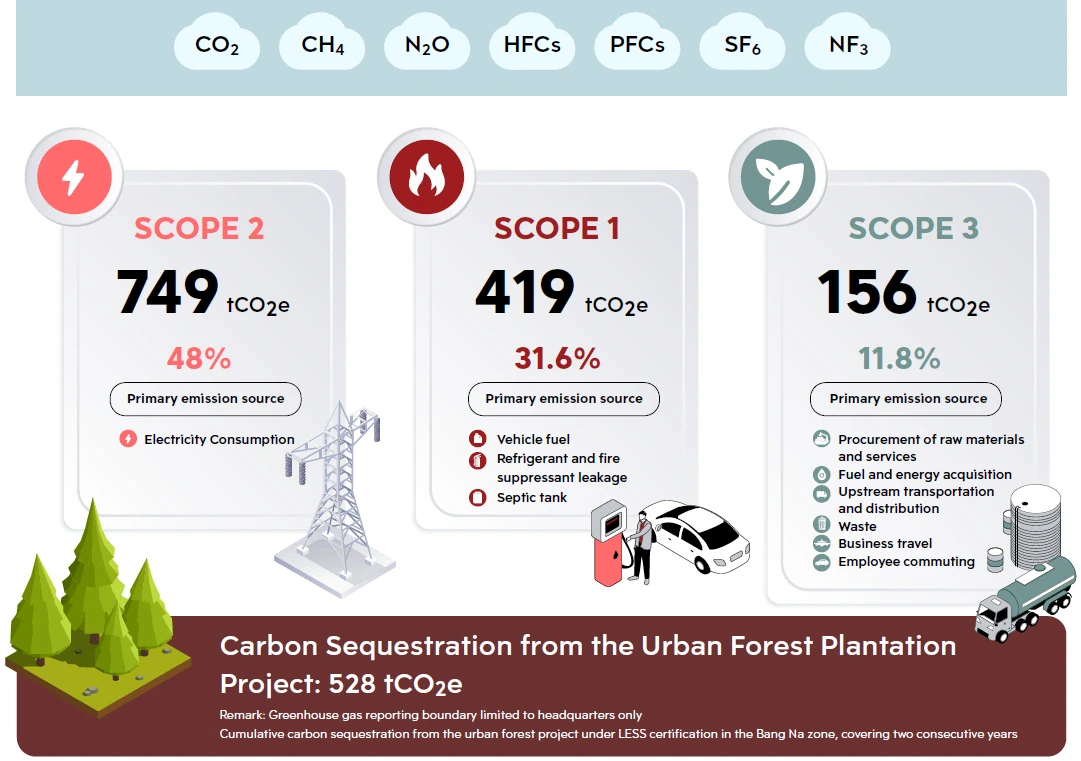
Greenhouse Gas Emissions Overview and Carbon Sequestration
Primary Emission Sources and Carbon Sequestration from the Urban Forest Plantation Project

Collaboration with stakeholders
AP (Thailand) Public Company Limited recognizes that climate change management requires collaboration from all sectors, government, private, community, and partners across the value chain, in order to build a truly sustainable ecosystem with positive impacts on society and the environment.
In 2025, the company undertook collaborations with partners across various sectors to promote carbon reduction and drive a circular economy, for example:
- Waste to Value Project: In collaboration with Quality Construction Products Public Company Limited, this initiative repurposes lightweight concrete waste from construction processes into new uses, thereby reducing landfill waste and conserving new resources.
- “Know Waste, No Waste Project: In partnership with juristic entities and residents of AP Thailand projects, this program promotes systematic waste separation at the source and fosters a waste management culture in urban communities.
- Greenhouse Gas Reduction Support Project: Implemented in collaboration with government agencies and environmental experts, this project promotes the expansion of green spaces, natural carbon sequestration, and biodiversity conservation within residential developments.
These joint initiatives not only help reduce greenhouse gas emissions across the value chain but also generate lasting social and environmental value for surrounding communities, reflecting the company’s commitment to driving change through collective action.
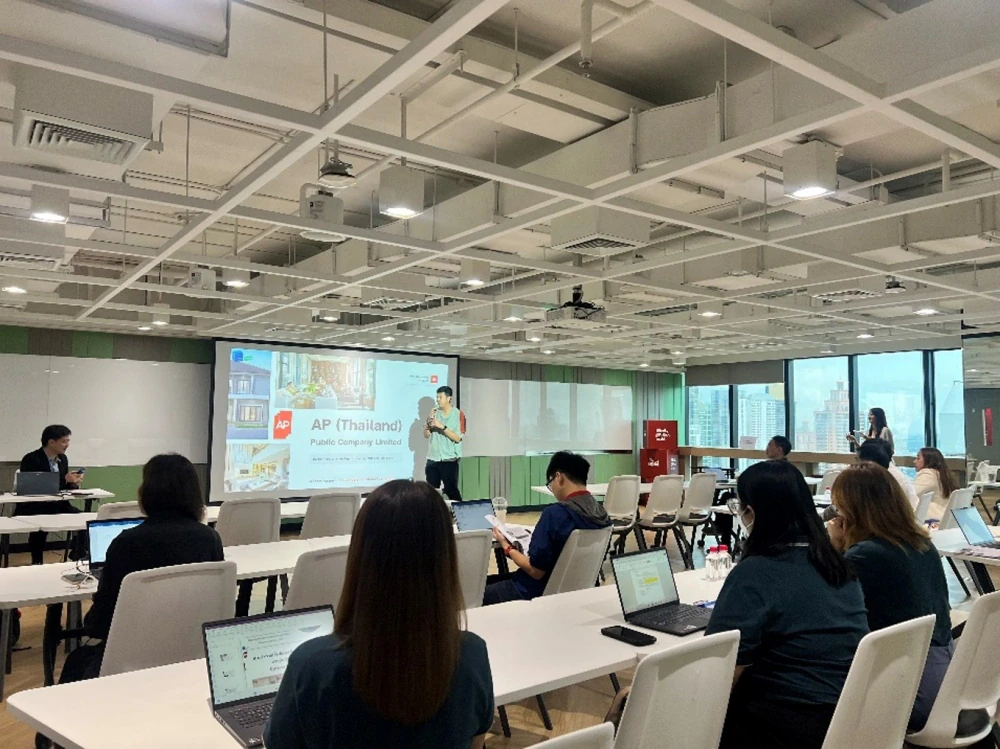
Organizational Carbon Footprint Development Workshop
In 2025, the Company organized a practical workshop on “Carbon Footprint for Organization” to strengthen participants’ foundational knowledge and understanding of climate change and prepare the organization for greenhouse gas emissions reporting in accordance with the guidelines of the Thailand Greenhouse Gas Management Organization (Public Organization) (TGO) and ISO 14064-1.
The workshop brought together approximately 50 management representatives and relevant personnel from across all departments. External experts shared their knowledge and provided technical guidance to enhance employees’ understanding of climate change, including the interrelationships between Carbon Footprint, Carbon Credits, Carbon Neutrality, and Net Zero. The workshop also covered approaches to organizational adaptation in alignment with climate action directions at both the national and international levels.